Montessori for your child: how the method works, from what age and how to choose a kindergarten or school
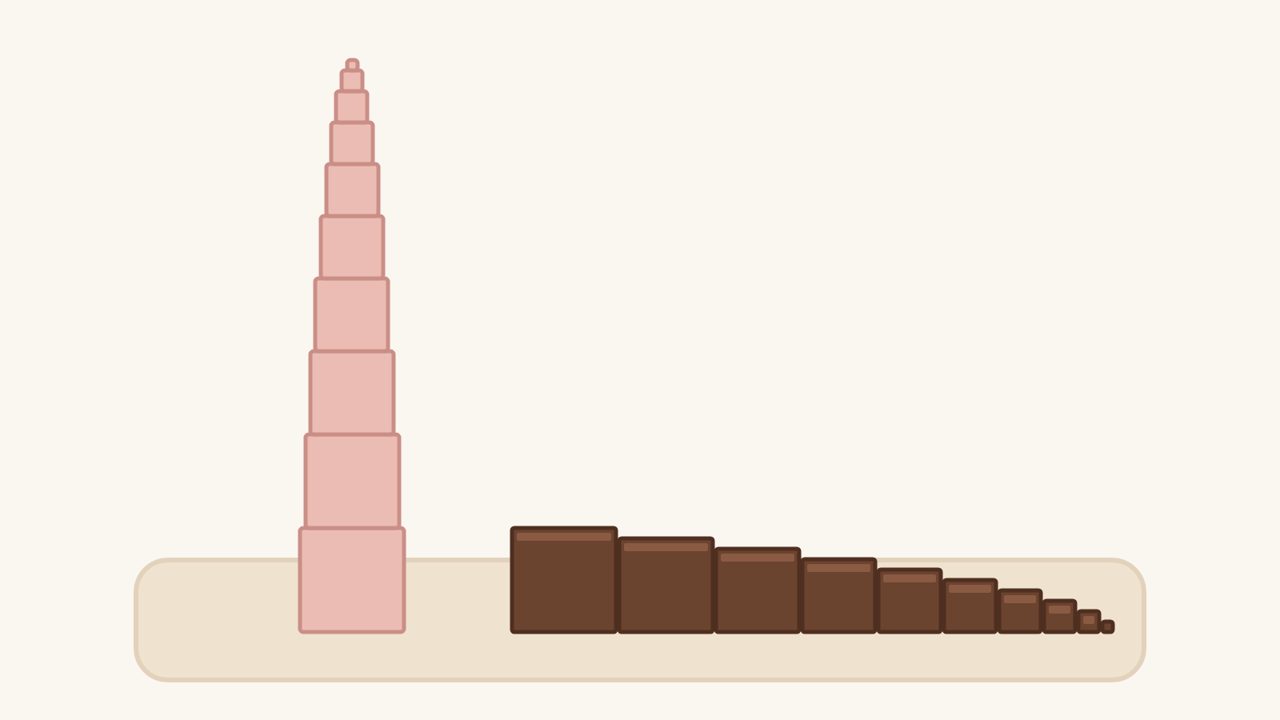
"Montessori" is one of the best-known words in private early education. It is used for a full-day kindergarten, for a school for 6–12-year-olds and for a children's centre where Montessori is one class a week. Nobody owns the name: the American Montessori Society (AMS) says plainly that the word "Montessori" is in the public domain and anyone can use it (AMS). So it helps to know how the method actually works — then it is easier to tell a group that follows Montessori from a kindergarten where Montessori is only a sign over the door.
Where the method comes from
Maria Montessori was born in 1870 in the Italian town of Chiaravalle and in 1896 became one of the first women doctors in Italy. On 6 January 1907 she opened the first Casa dei Bambini — Children's House — in the San Lorenzo district of Rome. Her book on the method came out in 1909, and she gave her first course for teachers that same summer. In 1929, together with her son Mario, she founded the Association Montessori Internationale (AMI), which still trains teachers today; it is based in Amsterdam. Maria Montessori died in 1952 in the Netherlands (AMI archives).
How a Montessori group works
The heart of the method is not special toys but the way the classroom and the day are organised.
- A prepared environment. The room is furnished at the children's height: low open shelves, small tables, mats for working on the floor. Each material has its own place on the shelf. The AMI glossary describes the environment as one that contains everything needed for development and nothing superfluous (AMI).
- Free choice. A child takes a material from the shelf, works with it as long as needed and puts it back. There are no compulsory lessons for the whole group at once — the standard of the Russian Montessori Fund rules them out explicitly (Montessori Fund, in Russian).
- Mixed ages. One group holds children about three years apart, for example from 3 to 6. AMS names such a class one of the five essential components of Montessori education (AMS).
- A long work period. In the morning children work without breaks for group lessons. AMI considers three hours every morning the norm (AMI USA); AMS asks for at least two hours, three being optimal (AMS).
- The teacher observes. The teacher is first of all an observer and presents a new material to each child individually, when the child is ready for it, in a precise and calm way (AMI).
Materials in a group for 3–6-year-olds are arranged in areas (AMI):
- Practical life — pouring water, doing up buttons on a dressing frame, washing, tidying up.
- Sensorial — telling apart size, colour, shape, weight and sound: the pink tower, the brown stair, the cylinder blocks.
- Language — speaking, writing, reading.
- Mathematics — from counting to the first operations with numbers, including with the golden beads.
There is culture as well — geography, biology, music, art. Many Russian kindergartens give it a separate area called "Cosmos". For AMI itself, "cosmic education" is the elementary programme for ages 6–12: children are told the "great stories" of the universe, life, people, writing and numbers (AMI).
From what age
Montessori divided childhood into six-year planes, each split into two three-year halves (AMI glossary). Hence the age groups:
- 0–3 years. At AMI these are the Nido, up to about 14 months, and the Infant Community, from 14 months to three years (AMI). Russian kindergartens usually call such groups "toddler" or "mini-kindergarten".
- 3–6 years. The classic Montessori kindergarten, the Children's House. Children usually start at 2½–3 (Montessori Fund, in Russian).
- 6–12 years. Elementary school: small mixed-age groups and cosmic education (AMI).
- 12–18 years. The adolescent plane — AMI has a teacher training course for it too (AMI).
Most of our catalogue is kindergartens: of 63 organisations in October 2026, 42 are private kindergartens, 9 are schools and 12 are children's centres and clubs where Montessori is part of the programme.
What research says
The method has been studied for a long time, but fair comparisons are rare: families choose the kindergarten themselves, and it is hard to separate the effect of the method from the effect of the family. That is why the most valuable studies are those where places in public Montessori schools in the USA were allocated by lottery, so winners could be compared with those who lost.
- 2006, Milwaukee, one school. Five-year-olds from the Montessori group did better in reading and maths, executive function and understanding other people's beliefs. Twelve-year-olds wrote more complex and creative essays, while standard reading and maths tests showed no difference (Lillard and Else-Quest, Science, 2006).
- 2017, Hartford, two schools, 141 children aged 3–6, three years of observation. By the end the Montessori group had higher academic results. Children from low-income families in the Montessori group did not differ statistically from children from better-off families in ordinary kindergartens (Lillard et al., 2017).
- 2023, a systematic review of 32 studies. A small-to-moderate positive effect both on academic outcomes and on executive function, creativity and attitudes to school, stronger in preschool and primary years (Randolph et al., 2023).
The caveats matter. Almost all of the studies are American. The authors themselves write that the result depends on how faithfully a school follows the method. Some authors of the review have ties to Montessori schools, as the publication itself discloses. The conclusion for a parent is simple: the benefit comes with the quality of a particular group, not with the sign over the door.
Montessori in Russia
In 1913 Montessori's book came out in Russian, and the same year Yulia Fausek opened a kindergarten that worked by the new method. In 1918 in Petrograd she became head of the Montessori department at the Pedagogical Institute of Preschool Education. In 1930 the last Montessori group in the USSR was closed, and Montessori herself was branded a "reactionary educator". In 1991 the method came back: teachers secured AMI's support, and the first Montessori group opened in Moscow (Gapanenok and Teterina, 2021, in Russian).
Today several organisations train teachers in Russia, and their standards differ:
- The Montessori Fund has been AMI's affiliated society in Russia since 2011 (AMI). Linked to it is the Higher School of the Montessori Method in St Petersburg, the first official AMI training centre in the country (AMI). The Fund keeps a register of groups whose teachers hold an AMI diploma (register, in Russian).
- The Association of Montessori Teachers of Russia (AMPR) has worked since 1997: continuing education courses for teachers and public accreditation of kindergartens and schools (AMPR, in Russian).
- The International Institute of Montessori Pedagogy (MIMP) runs teacher courses; the institute says it grew out of the Interregional Montessori Association (MIMP, in Russian).
The difference in standards is visible. Under the AMI standard a 3–6 group is led by one teacher with an AMI diploma and an assistant, with 24 to 35 children (AMI USA). AMPR considers 15–25 children and at least two Montessori teachers during free work the norm (AMPR, in Russian).
For kindergartens there is also the programme "Kindergarten under the Montessori system" (Moscow: Natsionalnoye Obrazovaniye, 2014); it is included in the Navigator of Preschool Education Programmes of the Federal Institute for Education Development (FIRO, 2023).
How to choose a kindergarten or school
Since anyone can put "Montessori" on a sign, look at how the group is organised. Here is what Montessori organisations themselves — AMS, AMI and the Russian Montessori Fund — advise:
- Who the teacher is and where they trained. For which age their diploma or course is, and how long the training took. AMI's diploma course for the 3–6 group at the Higher School of the Montessori Method in St Petersburg runs for more than a year (HSMM, in Russian); AMPR's continuing education course is 180–210 hours (AMPR, in Russian).
- Mixed ages. Children in the group are about three years apart and are not split into sub-groups by age.
- A full set of materials on open shelves, within the children's reach.
- A morning work period of two to three hours without breaks for group lessons. If the day is divided into short lessons and "Montessori" is one of them, this is an ordinary kindergarten with a Montessori class.
- How many children and adults are in the group — see the norms above.
- Whether you can watch the group at work. The Montessori Foundation in the USA advises arranging a classroom observation before enrolling (Montessori Foundation).
- Recognition. Whether the group is in the Montessori Fund's register or holds AMPR's public accreditation certificate. If not, that does not make the kindergarten bad, but it is a reason to ask more questions.
A children's centre with a Montessori class once or twice a week offers useful work with the materials, but it is not a Montessori environment the child lives in every day. Decide in advance which one you need.
How much it costs
We looked at prices on the websites of 19 kindergartens, schools and centres from our catalogue in 16 Russian cities (October 2026). The year of the price list is not always given, so treat this as a guide rather than a reference:
- Kindergarten, full day: from RUB 15,500 a month at Dinastiya in Kirov (meals extra) to RUB 55,500 at More Montessori in Krasnogorsk (listings in Russian). In the Moscow region it is RUB 42,000–55,000, in other cities more often RUB 20,000–45,000. A half day, until lunch, is often available too and costs less.
- School for ages 6–12: from RUB 27,000 at Radost school in Chelyabinsk to RUB 49,500 at Akademiya Druzey in Nizhny Novgorod.
- Fees and meals. Seven of the 19 organisations charge an entrance or annual fee, most often RUB 7,500–30,000. Meals are often paid separately — RUB 350–450 a day.
- Centres and single visits. A single or trial day costs RUB 2,000–3,800. At the Children's Montessori Centre in Pskov eight visits of the 3–6 group cost RUB 3,200.
Check the price with the kindergarten itself: it depends on the city, the length of the day, the age group and what is included.
Where to find one
The catalogue on this site lists 63 organisations in 39 Russian cities (October 2026). Most are in the Moscow region (13 in seven towns) and in Nizhny Novgorod (5), with three each in Yekaterinburg, Kazan, Krasnodar, Novosibirsk and Tyumen. Each organisation has a detailed listing on its city site, in Russian: address, age, website. We check every listing by hand. If your kindergarten or school is missing from the catalogue, write to us — we will check it and add it.